CoCare.
Designing a family coordination platform for dementia care — reducing carer burnout through structured collaboration and shared responsibility.
Designing a coordinated care platform that reduces burnout among dementia carers through structured family collaboration. Research showed that higher family involvement reduces burnout — but in practice, care responsibilities are rarely distributed evenly.
- Product strategy
- Mobile app UX
- Marketing site design
- Messaging framework
- Prototype development
- Pricing model design
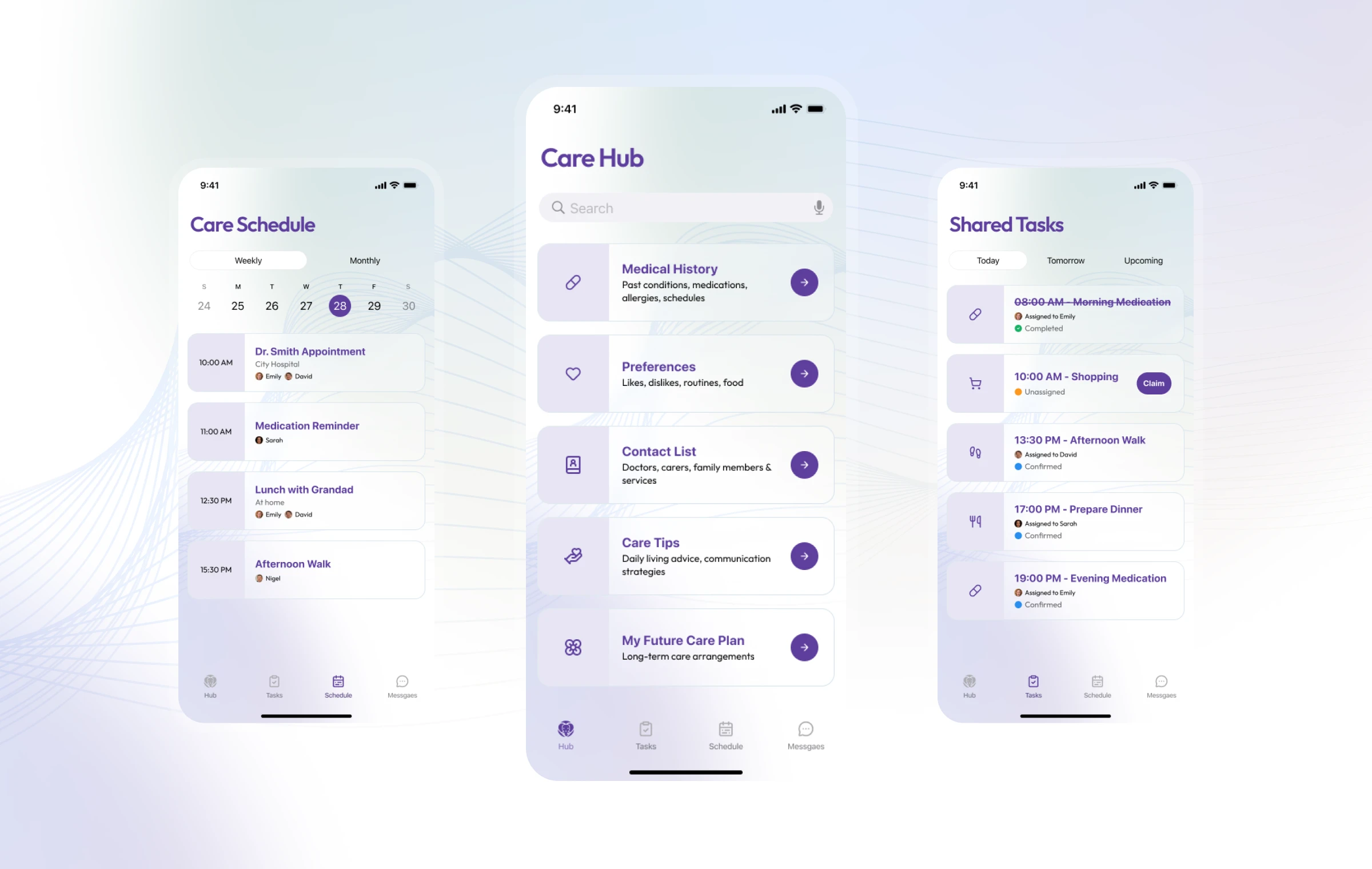
Reducing burnout in fragmented family systems.
Caring for a loved one with dementia places disproportionate strain on the primary carer. Research shows that higher family involvement reduces burnout — but in practice, care responsibilities are rarely distributed evenly.
Communication is scattered across text messages, notes apps and memory. Critical details live inside the primary carer's head. No one outside the inner circle knows what needs doing or when support is most needed.
"The deeper issue was a lack of structure, not a lack of love."
Research synthesis, community interviews
Primary carers struggled to step away, even briefly, because family members created friction within already stressed households. The opportunity was structural: give families a system that distributes care without requiring constant coordination.
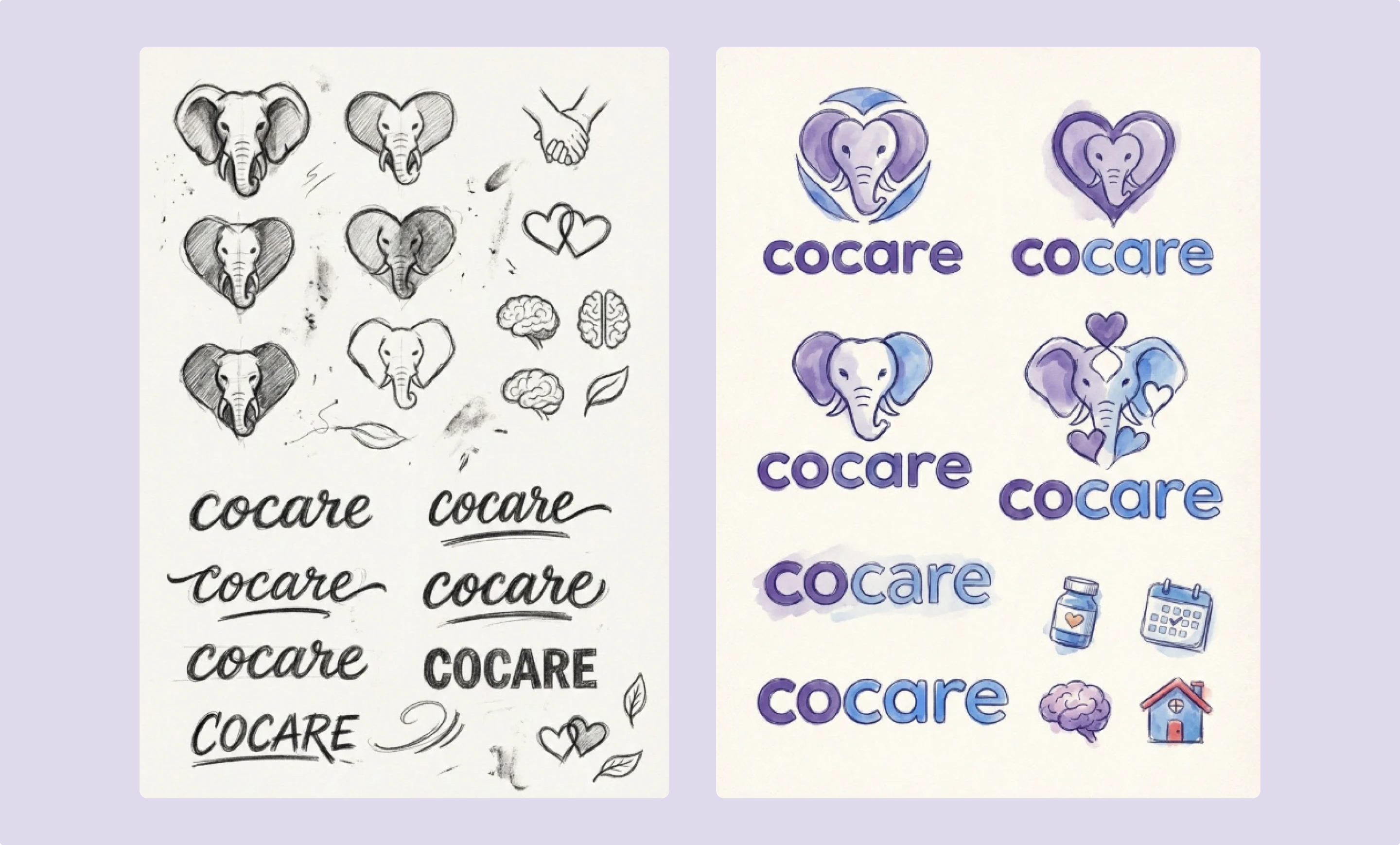
Three pillars. One coordinated system.
CoCare was positioned as a teamwork platform rather than a medical app. Every product and design decision was filtered through the same question: does this reduce or add to the primary carer's mental burden?
Teamwork, not tasks
Positioned as a coordination platform, not a care management tool. The emotional framing shifted responsibility without adding obligation — stronger families give better care.
Reduce mental load
Every feature decision filtered by one question: does this reduce or add to the primary carer's mental burden? If it added complexity without reducing effort, it didn't ship.
Structure over goodwill
The product built the scaffolding families needed to act well — without relying on everyone already knowing what to do or when to show up.
Family onboarding
Roles defined, responsibilities visible. Every member understands the system from the start — no ambiguity about who does what or when.
Shared calendar
Professional carer schedules visible to all. Family members can see when help is needed and offer support asynchronously — without waiting to be asked.
Recurring tasks
Assigned responsibilities that appear at the right time for the right person. Reduces the invisible labour of coordination that falls to the primary carer by default.
Resource hub
Expert guidance, care prompts and reminders tailored to dementia care — surfaced at the moment they're most needed, not buried in a library.
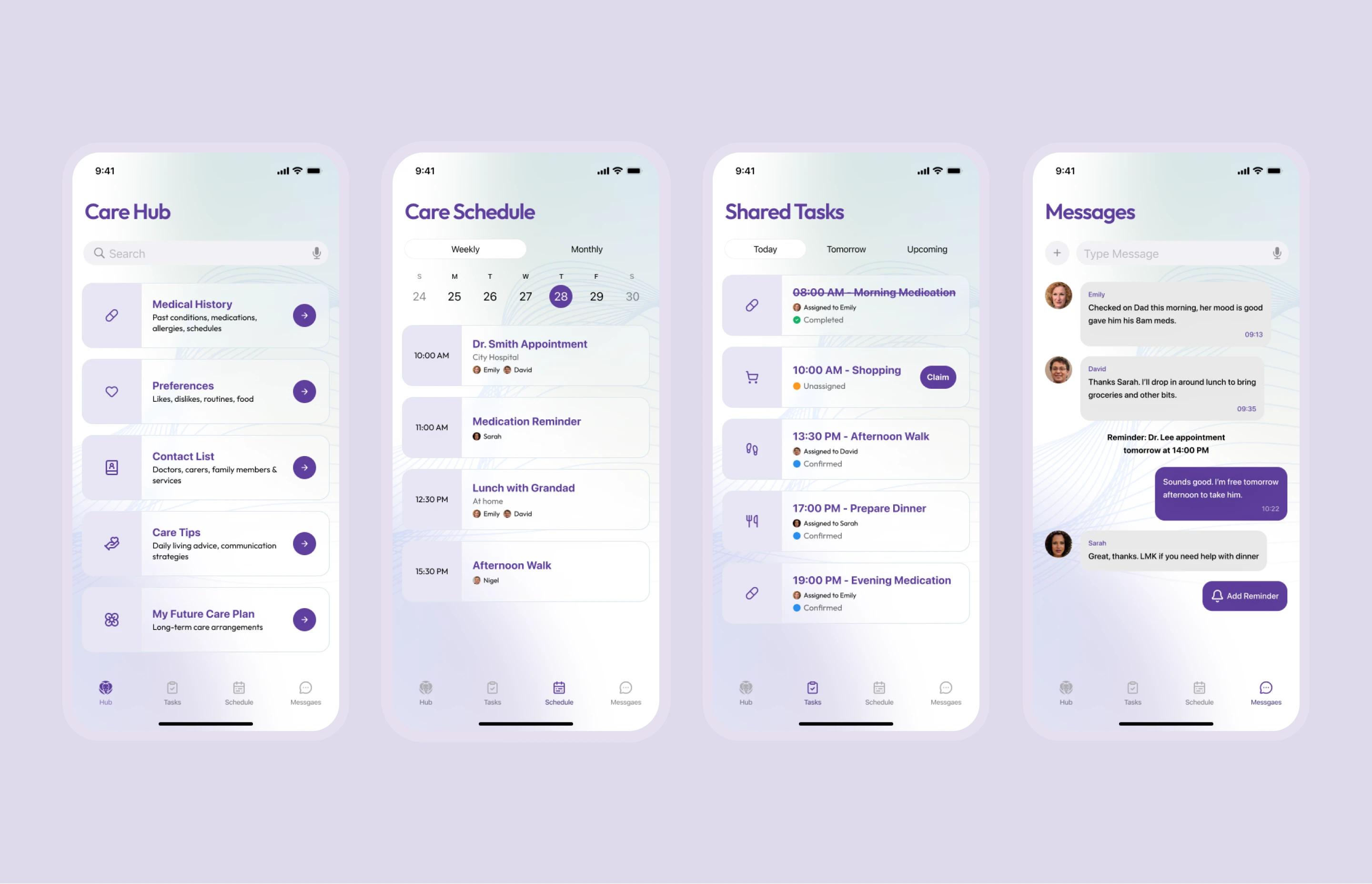
Visual identity
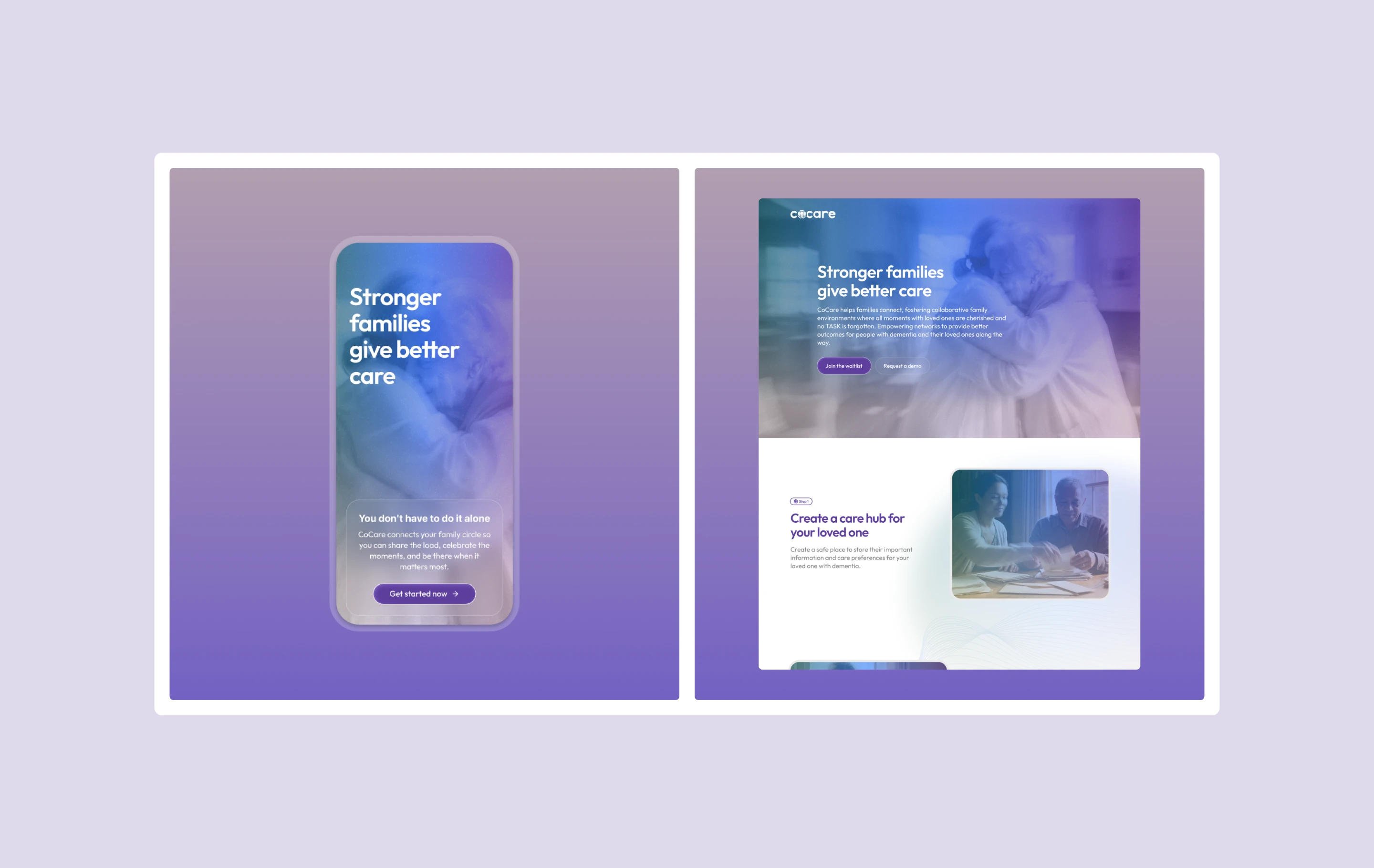
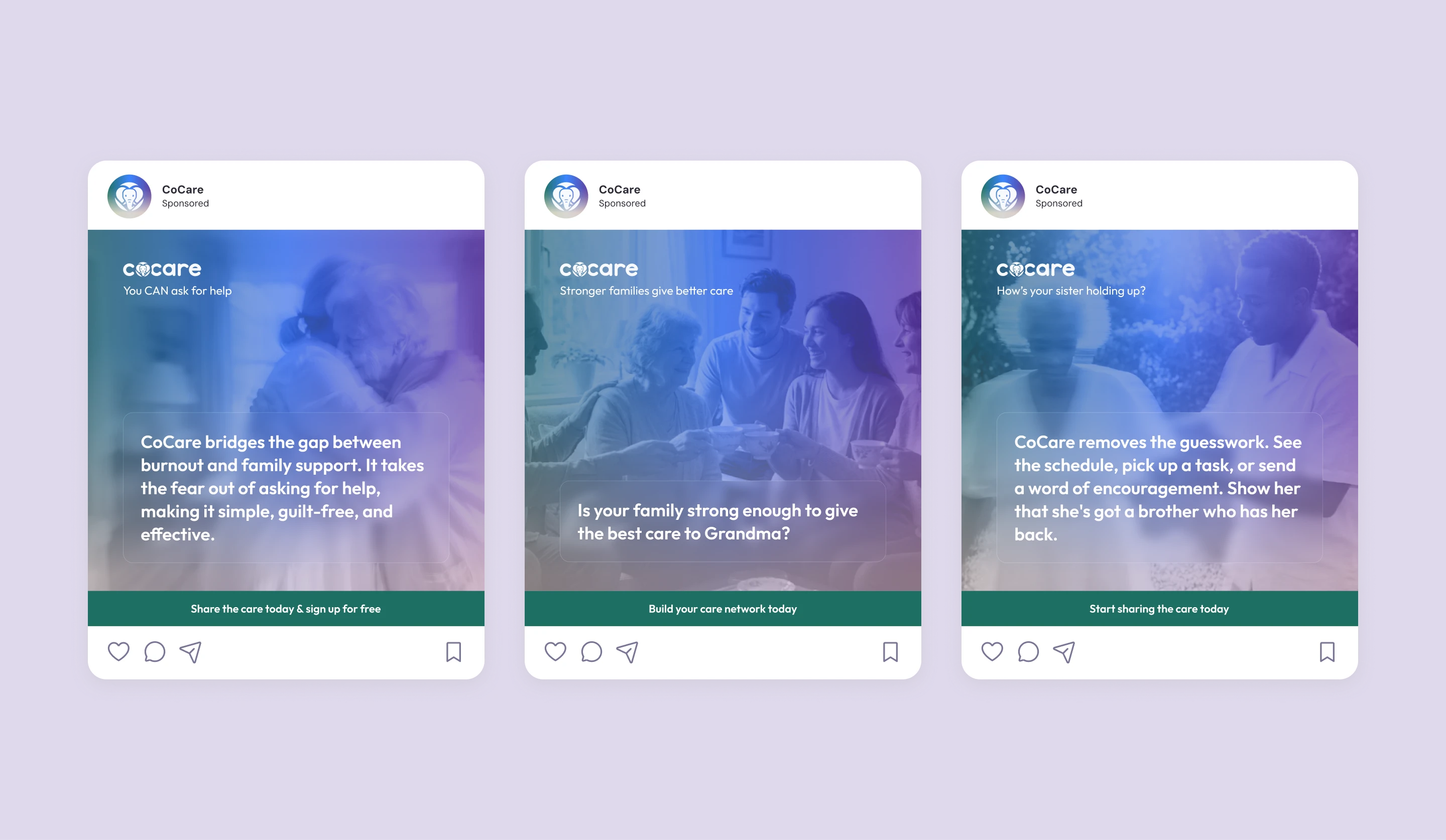
The visual identity embodied warmth and strength. Gradients and soft overlays created a sense of support. No medical jargon. The tone focused on empowerment — the idea that stronger families give better care.
Messaging centred on coordination and shared visibility. A deliberate departure from the clinical framing common in care technology.
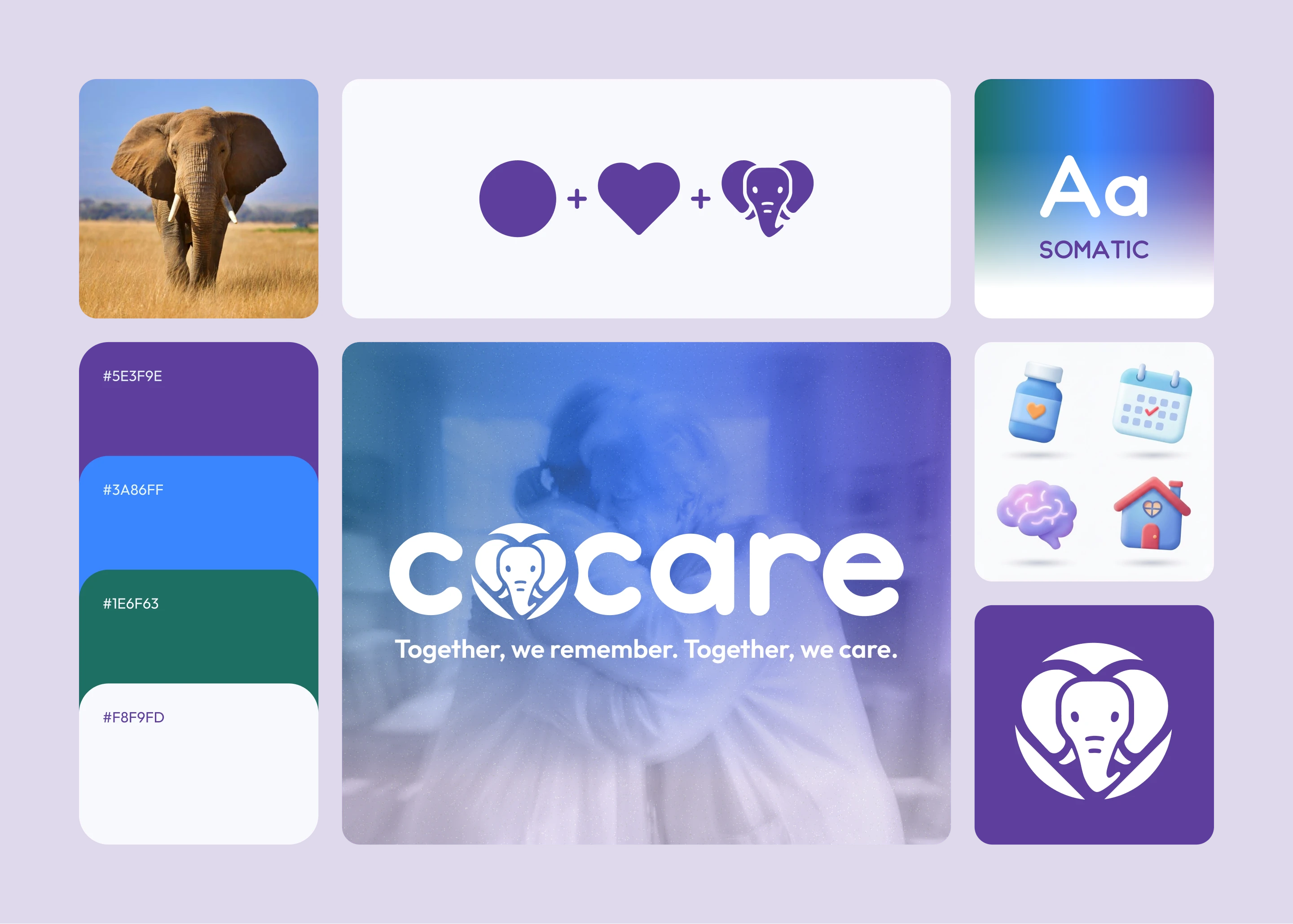
Platform design
Recurring assigned tasks, shared calendars, a message hub and a resource library formed the core experience. Every feature answered the same question about the primary carer's load before it shipped.
The marketing site mirrored the app's emotional framing, presenting a finished product experience while capturing early access sign-ups.
Designed as relief, not management
Carer confidence
RestoredPrimary carers able to step away, even briefly, with shared visibility replacing verbal updates and constant availability.
Family alignment
VisibleResponsibilities visible to all. No one left wondering what needed doing — or waiting to be told when support was needed.
Mental load
SharedBurden shifted from one person to a shared structure — resources surfaced at the right moment for the right person, not buried under information.
Early access
LaunchedMarketing site and pilot capturing test audience sign-ups across carer networks and charity partnerships ahead of product launch.
Stronger families
give better care.
The product wasn't designed to replace the care being given. It was designed to remove the friction that stopped families from giving it. When coordination becomes invisible, carers can focus on what matters.
CoCare was designed as a relief mechanism, not a management tool.